Friday, 14 June 2013

Insurance Quote

Insurance Quote Definition

      Source(Google.com.pk)                         
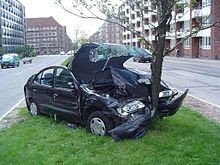
      The same type of policy you purchase for your personal use is also necessary for your business. If your business provides employees with company cars, or if you have a delivery van, you need to think about auto insurance. The good news here is that auto insurance offers more of an opportunity to save money than most other types of business insurance. The primary strategy is to increase your deductible; then your premiums will decrease accordingly. Make sure, however, that you can afford to pay the deductibles should an accident happen. For additional savings, remove the collision and comprehensive coverage from older vehicles in your fleet.
Never cut corners on automotive liability coverage. Minimal packages of 25/50/25 (per person bodily injury/total accident coverage/property damage) are available; however, hitting an expensive sports car can quickly wipe out the insurance company's coverage. Pay the extra few dollars for higher coverage of 100/300/100. Most states have laws concerning uninsured motorists coverage. Supplement the standard auto policy, as the costs are minimal.
As a businessperson, meetings and seminars may take you out of town. The daily price of rental-car insurance for collision has reached astronomical levels. The addition of a relatively inexpensive endorsement to your company auto policy can save money and prevent headaches on the road. This also gives you the advantage of rate shopping with the major rental agencies. Without this endorsement, the costs of collision damage waiver (CDW) offered by the major car rental companies can tack on up to $10 per day for car rentals. Failure to purchase the CDW results in the renter carrying full responsibility for any damage to the car. Ask your insurance carrier if this coverage is automatically included or if there's an extra fee.
Most states have an insurance watchdog agency to oversee the industry as a whole. They release comprehensive studies citing rates for some typical drivers in average cars, driving safely for a set number of miles. It will have information on the premiums your state's insurance firms charge for the same standard and is an excellent tool for determining the maximum coverage at the minimum costs
.
Insurance Quote
Insurance Quote
Insurance Quote
Insurance Quote
Insurance Quote
Insurance Quote
Insurance Quote
Insurance Quote
Insurance Quote
Insurance Quote
Insurance Quote
Insurance Quote
Insurance Quote
Insurance Quote
Insurance Quote
Insurance Quote
Insurance Quote
Insurance Quote
Insurance Quote
Insurance Quote
Insurance Quote

List Of auto Insurance Companies

List Of auto Insurance Companies Definition

Source(Google.com.pk)
This is a common question asked by consumers but how exactly do you define a top 10 list – do you mean the top 10 California car insurance companies by market share? Or the top 10 California auto insurance companies by consumer complaints? Read the following article to learn more about what determines the top auto insurance in CA.
To find rates from the top car insurance companies in California, don’t forget to enter your ZIP code into the FREE comparison tool above!
What Makes the Top 10 List?
There are hundreds of ways to define a top 10 list and even as many sources to analyze data from. The top California auto insurance companies are determined by several factors. The California car insurance market is extremely competitive and many car insurance company names pop up depending on variables used to calculate a top 10 list.
So who has the best car insurance in California?
With reference to the question above we will list the top 10 California car insurance companies by market share below although you need to understand that every car insurance company is unique and only 2 things should matter the most to you when searching for a new auto insurance policy:
The trust you have in an insurance companies ability to pay future claims in an efficient manner
And the offer for affordable policy coverage which meets your financial needs
Who are the top 10 California Car Insurance Companies by Market Share?
According to the California Department of Insurance the top 10 personal auto insurance companies offering policy coverage in California are:
State Farm
AAA
California State Automobile Association Inter-Insurance Bureau
Mercury Insurance Company
Allstate
Mid-Century Insurance
21st Century Insurance
Farmers Insurance Exchange
Infinity Insurance Company
Progressive
Who is the best California Car Insurance Company?
Whether or not a company is listed on any top 10 list the question of who is the best car insurance California company for any given market is even harder to define as the word’s best and can mean different things to different people. Do you mean who has the cheapest California car insurance? Or do you mean who has the best customer service? The best auto insurance companies in California can mean any of the above.
Does California offer Low Income Car Insurance Assistance?
Yes, California has an auto insurance program designed to help low income drivers obtain car insurance coverage below the minimum required. The program is called the California Low Cost Auto Insurance Program (CLCA) and you can learn more about it here?
How do I get a California Car Insurance Quote?
Hopefully the list above helps identify potential auto insurance companies for your new policy however this is only a partial list and California is home to the largest auto insurance market with over 100 providers in the state. Your best option to find the most affordable car insurance coverage in California is to always start an auto insurance quote comparison search online.
List Of auto Insurance Companies

Insurance Companys

Insurance Companys Definition

Source(Google.com.pk)
Definition of 'Captive Insurance Company'
A company that provides risk-mitigation services for its parent company. A captive insurance company may be formed if the parent company is unable to find an outside firm to insure against a particular business risk; if the parent company determines that the premiums it pays to the captive insurance company are sufficiently deductible; or that the insurance the captive insurance company provides is more affordable or offers better coverage. 
Investopedia explains 'Captive Insurance Company'
Whether the parent company will be able to see a tax break from the creation of a captive insurance company depends on the classification of insurance company transactions. The IRS requires risk distribution and risk shifting to be present in order for a transaction to be considered "insurance".
While there are financial benefits to creating a separate entity to provide insurance services, parent companies must also weigh the personnel cost of a captive insurance company. Some types of risk that the captive company might insure against could result in larger expenses than the parent company can afford, and can lead to bankruptcy. Larger private insurers are less likely to be bankrupted by a single event because of a diversified pool of risk.A company that offers insurance policies to the public, either by selling directly to an individual or through another source such as an employee's benefit plan. An insurance company is usually comprised of multiple insurance agents. An insurance company can specialize in one type of insurance, such as life insurance, health insurance, or auto insurance, or offer multiple types of insurance.
In health insurance, coinsurance is sometimes used synonymously with copayment, but is defined differently – a copay is typically fixed while the coinsurance is a percentage that the insurer pays after the insurance policy's deductible is exceeded up to the policy's stop loss. It is expressed as a pair of percentages with the insurer's portion stated first. The maximum percentage the insured will be responsible for is generally no more than 50%. Once the insured's out-of-pocket expenses equal the stop loss the insurer will assume responsibility for 100% of any additional costs. 70-30, 80-20, and 90-10 insurer-insured coinsurance schemes are common, with stop loss limits of $1,000 to $3,000 after which the insurer covers all expenses.
In property insurance 
Coinsurance is a penalty imposed on the insured by the insurance carrier for under reporting/declaring/insuring the value of tangible property or business income. The penalty is based on a percentage stated within the policy and the amount under reported. As an example:
A building actually valued at $1,000,000 has an 80% coinsurance clause but is insured for only $750,000. Since its insured value is less than 80% of its actual value, when it suffers a loss, the insurance payout will be subject to the underreporting penalty. For example: It suffers a $200,000 loss. The insured would recover $750,000 ÷ (.80 × 1,000,000) × 200,000 = $187,500 (less any deductible).
In this example the underreporting penalty would be $12,500.
The most commonly issued coinsurance percentage would be 80% but can be as high as 100%. The latter[100%] would impose the greatest penalty for under reporting. For this reason, it is vital that values of property are accurately reported and updated annually to reflect inflation and other increases in cost.
In title insurance 
Owner's title insurance policy forms of the American Land Title Association created between 1987 and late 2006, contain coinsurance clauses. For partial losses, they require the insured carry a percentage of the risk of loss in two circumstances. The first is if the insured did not insure its title for at least 80 percent of its market value at the time the policy was issued. In this case, the insurer will pay only 80 percent of the loss. The second is when improvements constructed on the property after the policy is issued increase the property's value by at least 20 percent above the amount of the policy. In this case, the insurer will pay a percentage of the claim equal to the ratio of 120 percent of the amount of insurance purchased divided by the sum of the amount of insurance and the cost of the improvements.
Coinsurance is also used among U.S. domestic title insurers in a manner similar to that described below for the international insurance market.
Insurance Companys
Insurance Companys
Insurance Companys
Insurance Companys
Insurance Companys
Insurance Companys
Insurance Companys
Insurance Companys
Insurance Companys
Insurance Companys
Insurance Companys
Insurance Companys
Insurance Companys
Insurance Companys
Insurance Companys
Insurance Companys
Insurance Companys
Insurance Companys
Insurance Companys
Insurance Companys
Insurance Companys

Insurance Quotes


Insurance Quotes Definition

Source(Google.com.pk)
Insurance is the equitable transfer of the risk of a loss, from one entity to another in exchange for payment. It is a form of risk management primarily used to hedge against the risk of a contingent, uncertain loss.
An insurer, or insurance carrier, is a company selling the insurance; the insured, or policyholder, is the person or entity buying the insurance policy. The amount of money to be charged for a certain amount of insurance coverage is called the premium. Risk management, the practice of appraising and controlling risk, has evolved as a discrete field of study and practice.
The transaction involves the insured assuming a guaranteed and known relatively small loss in the form of payment to the insurer in exchange for the insurer's promise to compensate (indemnify) the insured in the case of a financial (personal) loss. The insured receives a contract, called the insurance policy, which details the conditions and circumstances under which the insured will be financially compensated.
Insurance involves pooling funds from many insured entities (known as exposures) to pay for the losses that some may incur. The insured entities are therefore protected from risk for a fee, with the fee being dependent upon the frequency and severity of the event occurring. In order to be an insurable risk, the risk insured against must meet certain characteristics. Insurance as a financial intermediary is a commercial enterprise and a major part of the financial services industry, but individual entities can also self-insure through saving money for possible future losses.
Insurability
Main article: Insurability
Risk which can be insured by private companies typically shares seven common characteristics:
Large number of similar exposure units: Since insurance operates through pooling resources, the majority of insurance policies are provided for individual members of large classes, allowing insurers to benefit from the law of large numbers in which predicted losses are similar to the actual losses. Exceptions include Lloyd's of London, which is famous for insuring the life or health of actors, sports figures, and other famous individuals. However, all exposures will have particular differences, which may lead to different premium rates.
Definite loss: The loss takes place at a known time, in a known place, and from a known cause. The classic example is death of an insured person on a life insurance policy. Fire, automobile accidents, and worker injuries may all easily meet this criterion. Other types of losses may only be definite in theory. Occupational disease, for instance, may involve prolonged exposure to injurious conditions where no specific time, place, or cause is identifiable. Ideally, the time, place, and cause of a loss should be clear enough that a reasonable person, with sufficient information, could objectively verify all three elements.
Accidental loss: The event that constitutes the trigger of a claim should be fortuitous, or at least outside the control of the beneficiary of the insurance. The loss should be pure, in the sense that it results from an event for which there is only the opportunity for cost. Events that contain speculative elements, such as ordinary business risks or even purchasing a lottery ticket, are generally not considered insurable.
Large loss: The size of the loss must be meaningful from the perspective of the insured. Insurance premiums need to cover both the expected cost of losses, plus the cost of issuing and administering the policy, adjusting losses, and supplying the capital needed to reasonably assure that the insurer will be able to pay claims. For small losses, these latter costs may be several times the size of the expected cost of losses. There is hardly any point in paying such costs unless the protection offered has real value to a buyer.
Affordable premium: If the likelihood of an insured event is so high, or the cost of the event so large, that the resulting premium is large relative to the amount of protection offered, then it is not likely that the insurance will be purchased, even if on offer. Furthermore, as the accounting profession formally recognizes in financial accounting standards, the premium cannot be so large that there is not a reasonable chance of a significant loss to the insurer. If there is no such chance of loss, then the transaction may have the form of insurance, but not the substance. (See the US Financial Accounting Standards Board standard number 113)
Calculable loss: There are two elements that must be at least estimable, if not formally calculable: the probability of loss, and the attendant cost. Probability of loss is generally an empirical exercise, while cost has more to do with the ability of a reasonable person in possession of a copy of the insurance policy and a proof of loss associated with a claim presented under that policy to make a reasonably definite and objective evaluation of the amount of the loss recoverable as a result of the claim.
Limited risk of catastrophically large losses: Insurable losses are ideally independent and non-catastrophic, meaning that the losses do not happen all at once and individual losses are not severe enough to bankrupt the insurer; insurers may prefer to limit their exposure to a loss from a single event to some small portion of their capital base. Capital constrains insurers' ability to sell earthquake insurance as well as wind insurance in hurricane zones. In the US, flood risk is insured by the federal government. In commercial fire insurance, it is possible to find single properties whose total exposed value is well in excess of any individual insurer's capital constraint. Such properties are generally shared among several insurers, or are insured by a single insurer who syndicates the risk into the reinsurance market.
Legal
When a company insures an individual entity, there are basic legal requirements. Several commonly cited legal principles of insurance include:
Indemnity – the insurance company indemnifies, or compensates, the insured in the case of certain losses only up to the insured's interest.
Insurable interest – the insured typically must directly suffer from the loss. Insurable interest must exist whether property insurance or insurance on a person is involved. The concept requires that the insured have a "stake" in the loss or damage to the life or property insured. What that "stake" is will be determined by the kind of insurance involved and the nature of the property ownership or relationship between the persons. The requirement of an insurable interest is what distinguishes insurance from gambling.
Insurance Quotes
Insurance Quotes
Insurance Quotes
Insurance Quotes
Insurance Quotes
Insurance Quotes
Insurance Quotes
Insurance Quotes
Insurance Quotes
Insurance Quotes
Insurance Quotes
Insurance Quotes
Insurance Quotes
Insurance Quotes
Insurance Quotes
Insurance Quotes
Insurance Quotes
Insurance Quotes
Insurance Quotes
Insurance Quotes
Insurance Quotes

Life Insurance Quotes

Life Insurance Quotes Definition

Source(Google.com.pk)
A life insurance quote is the estimated cost of a life insurance policy based on information supplied by an applicant to an insurance company. To obtain a life insurance quote, an applicant is required to provide his/her age, gender and state whether they use tobacco. Mortality tables calculated by actuaries are used when calculating a life insurance quote. Health and family history are also commonly used in conjunction with these tables when processing a life insurance quote. It is standard practice for a life insurance quote to include written terms and conditions, for which a life insurance contract will be provided. A life insurance quote will state whether the insurance is term or permanent. Typically, insurance brokers or agents will obtain a life insurance quote on behalf of their customers. These representatives will shop one or more insurance companies to find the best price and coverage in a life insurance quote. A life insurance quote can also be obtained online.Popular Terms: FICO score, 1031 exchange, dividends payable, minority interest, Key Rate Duration, ex-dividend, annual return, diluted share, inflation, phantom income, command economy, 1035 exchange, class C shares, 144a, wholly-owned subsidiary, APR, liquidity ratio, margin rate, open position, quality assurance, in escrow, ex-dividend date, reverse mortgage, labor relations, cancelled check, real GDP, deferred revenue, per diem, debt service coverage, stock market close, option premium, EBITDA, LIBOR, implied volatility, retained earnings, Zero Cost Collar, irrevocable trust, covered put, risk management, current ratio, 401a, stock split, required rate of return, VIX, FTSE, deferred tax, balance sheet, limit order, average price per shareLife insurance is an important component of long-term financial planning. While the loss of a loved one is emotionally devastating, life insurance helps ensure that the financial loss doesn't worsen the tragedy.
What type of life insurance is best for you, though? For many individuals, the question boils down to choosing term life insurance vs. whole life insurance, or some other type of permanent
life insurance.
Both term life insurance and whole life insurance pay a death benefit free from federal income tax1 when the insured person dies while the policy is in effect. Let's examine the differences between them.
Term Life: Coverage for a Specified Time
Term life insurance provides coverage for a pre-defined period of time and premiums can be fixed for that period. Depending on the specifics of the policy, the death benefit may stay the same for as long as 30 years.
Whole Life: Protection for a Lifetime
Whole life insurance can span the individual's entire life and may offer cash value and can be "permanent" if the premiums are paid on time as required. The same is true of universal life insurance, another type of permanent life insurance which provides flexible premium features. Term life insurance tends to be less expensive and has lower initial premiums than whole life insurance or universal life insurance, allowing the consumer to buy a larger death benefit temporarily during years when families are raising children, paying for college and paying off mortgages. 
Whole life polices can generate cash value over the course of time, as do other types of permanent life insurance. Keeping all this information in mind, make sure to evaluate your individual circumstances such as age and financial objectives when selecting a policy. If you are planning to guarantee a death benefit even if you live to an old age, whole life or universal life insurance is something to consider.

Life Insurance Quotes